Brain Glioma in Children: Diagnosis, Treatment and Long-Term Follow-Up
How childhood gliomas present and are classified by molecular features, what surgery, chemotherapy and radiotherapy are used for, and why long-term follow-up matters — based on China's 2021 clinical practice guideline for paediatric brain glioma.
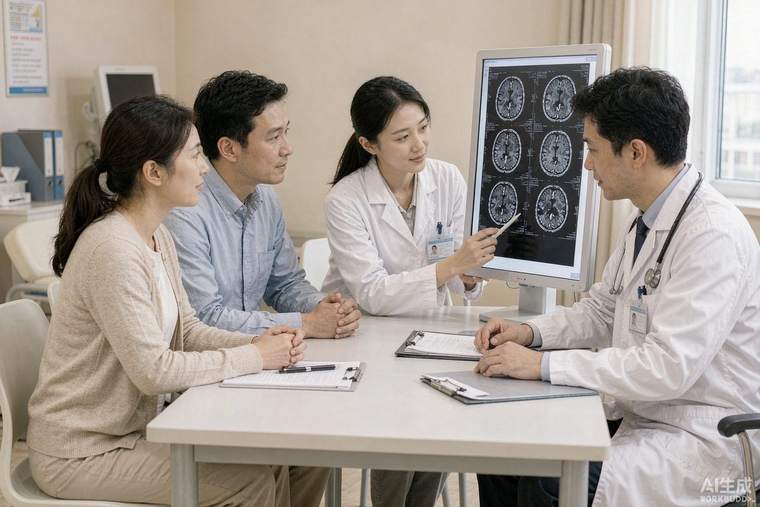
Gliomas are the most common group of brain tumours in children, and they are not one disease. Low-grade gliomas often grow slowly and can be cured or controlled for many years; high-grade gliomas are aggressive and, despite intensive treatment, frequently fatal. What has changed the field is molecular classification: tumours that look identical under the microscope now turn out to be biologically distinct diseases with different prognoses and different treatment sensitivities. China's 2021 clinical practice guideline for paediatric brain glioma reflects this shift and sets out a multidisciplinary pathway.
How they present
Three patterns dominate. Raised intracranial pressure from the mass itself or from blocked cerebrospinal fluid causing hydrocephalus — headache, vomiting, papilloedema, and in infants under two, an abnormally enlarging head circumference, irritability and lethargy. Seizures, particularly with tumours in the cerebral hemispheres. And focal neurological deficits depending on location: visual loss or hormonal disturbance from optic pathway and hypothalamic tumours, weakness from motor-area tumours, cranial nerve palsies and swallowing difficulty from brainstem tumours, and coordination problems from cerebellar tumours.
Diagnosis and classification
MRI with contrast is the central investigation, supplemented by CT for calcification or acute bleeding, and by advanced techniques — diffusion tensor imaging for surgical planning, perfusion and spectroscopy where useful. Surgery provides tissue for the diagnosis, and the pathology report now must include molecular markers: IDH status, 1p/19q co-deletion, H3 K27M, BRAF alterations, MGMT methylation and others, which define entities such as diffuse midline glioma and distinguish pilocytic astrocytoma from diffuse astrocytoma. Post-operative MRI within 24–72 hours is strongly recommended in the guideline — high-grade tumours assessed by contrast enhancement, low-grade by T2/FLAIR volumetrics — because that scan becomes the baseline against which all future response is judged.
Treatment
Maximal safe surgical resection is first-line wherever it can be done without causing new neurological deficit; the extent of removal directly influences outcome in low-grade disease, and for high-grade disease more extensive removal is associated with better survival where it is safe. Low-grade gliomas that are completely removed may need no further treatment and are observed; residual or progressive disease is treated with chemotherapy — carboplatin and vincristine, vinblastine, or targeted therapy for BRAF-altered tumours — with radiotherapy deferred where possible because of its effects on the developing brain. High-grade gliomas are treated with maximal resection followed by radiotherapy and chemotherapy, typically temozolomide, with targeted agents used where a druggable alteration exists, and with clinical trial participation actively encouraged.
Why children need special handling
Radiotherapy in young children carries long-term costs to cognition, growth, endocrine function and hearing, which is why it is deferred in infants and in many low-grade cases. Anaesthesia, blood loss, fluid management and temperature control all differ from adult practice. Treatment belongs in centres with paediatric neurosurgery, neuroradiology, neuropathology, radiation oncology, paediatric oncology and neurorehabilitation working together.
After treatment
Long-term follow-up is intrinsic to the guideline, not optional: regular MRI surveillance, monitoring of growth, puberty, thyroid and other hormone function, cognitive and educational assessment, hearing and vision testing, and support for school and family. Survivors of childhood brain tumours often need ongoing endocrine replacement, educational accommodations and psychological support for years after the tumour is controlled.