Cutaneous Lupus: Skin Disease in Lupus, Diagnosed and Treated
The forms of skin lupus, how the diagnosis is made and distinguished from other rashes, and the stepped treatment from sun protection to antimalarials and immunosuppression — based on the 2021 international guideline for diagnosis, treatment and long-term management.
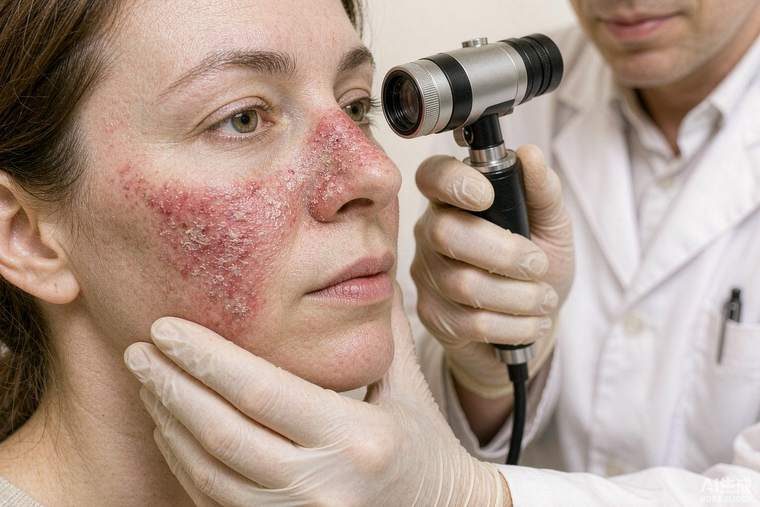
Lupus can affect the skin alone or as part of systemic lupus erythematosus. Cutaneous lupus erythematosus is a group of conditions with a wide range of appearances — from a scarring discoid plaque to the transient butterfly rash of acute systemic disease — and a shared sensitivity to ultraviolet light. It matters beyond appearance: active skin disease often signals systemic activity, scarring forms cause permanent hair loss and pigment change, and the treatments are specific. This guide follows the 2021 international guideline developed by dermatology and rheumatology societies across Asia, Europe and North America.
Forms and appearances
Acute cutaneous lupus is the malar or butterfly rash across the cheeks and nose, often after sun exposure, and is strongly associated with systemic disease. Subacute cutaneous lupus appears as annular or psoriasis-like red scaly patches on sun-exposed areas such as the chest, shoulders and arms; it is highly photosensitive and usually leaves no scar but marked pigment change. Chronic cutaneous lupus includes discoid lupus — well-defined, adherent, scaling plaques that heal with scarring, atrophy and permanent hair loss if on the scalp — and rarer variants such as lupus panniculitis and chilblain lupus. Mucosal ulcers, most often in the mouth or nose, are another recognised manifestation.
Getting the diagnosis right
Diagnosis combines the clinical pattern with specific tests: histopathology from a skin biopsy showing interface dermatitis with mucin deposition, and direct immunofluorescence from lesional skin showing immunoglobulin and complement deposition at the dermo-epidermal junction. Blood tests assess autoantibodies — ANA, anti-dsDNA, anti-Ro/SSA, anti-La/SSB — and, critically, screen for systemic involvement: full blood count, kidney function and urine, and complement levels. Because treatments overlap, the differential includes dermatomyositis, psoriasis, rosacea, seborrhoeic dermatitis, lichen planus, polymorphous light eruption and cutaneous lymphoma. Assessment should quantify activity and damage separately — scarring and pigment change are damage, not activity, and do not respond to immunosuppression.
Treatment: a stepped approach
First-line for everyone is rigorous photoprotection — broad-spectrum high-SPF sunscreen, protective clothing, hats and avoidance of peak sun — plus smoking cessation, because smoking reduces the effectiveness of antimalarials. Topical corticosteroids or calcineurin inhibitors (tacrolimus, pimecrolimus) treat localised disease. Antimalarial agents — hydroxychloroquine, or chloroquine with quinacrine added — are the systemic first-line treatment and reduce both skin activity and systemic flares; they require baseline and periodic eye monitoring and blood tests, and doses are weight-based. For refractory disease, options include systemic corticosteroids for flares, immunosuppressants such as methotrexate, mycophenolate, azathioprine or cyclophosphamide, and biologics — belimumab and anifrolumab — in selected patients, with thalidomide or lenalidomide reserved for severe refractory discoid disease under strict controls.
Long-term management
Patients are monitored for progression to systemic lupus, since a proportion of those presenting with skin-only disease develop systemic involvement; regular review with blood and urine testing is part of follow-up. Scarring scalp disease should be treated early and aggressively because hair loss is irreversible. Pregnancy requires planning: hydroxychloroquine is generally continued, while several immunosuppressants must be stopped.
Living with it
Practical advice: use sunscreen daily even indoors near windows, avoid tanning beds, stop smoking, and be aware that some drugs — including certain diuretics, proton pump inhibitors and anti-TNF agents — can trigger or worsen cutaneous lupus. Keep photographs of flares to show your clinician, since rashes are often at their best on the day of the appointment.