Insulin Pump Therapy: What Continuous Subcutaneous Insulin Infusion Involves
How an insulin pump works, who benefits most, the practical skills it requires, and how hypoglycaemia and sick days are handled — based on China's 2021 insulin pump guideline.
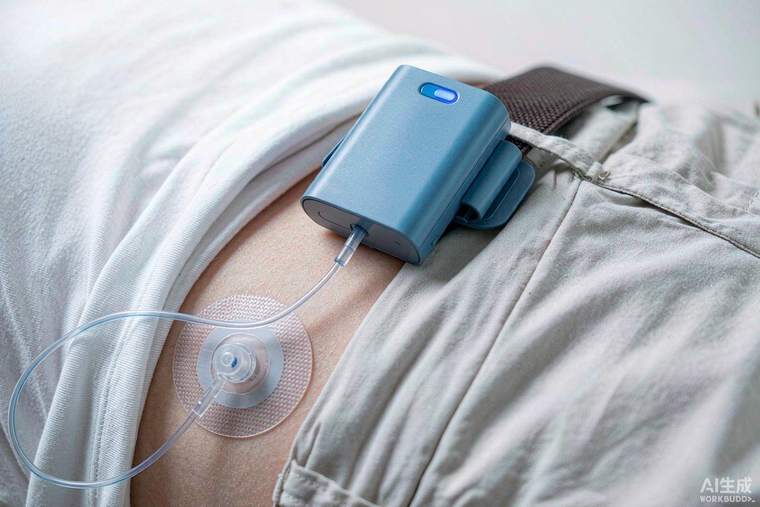
An insulin pump delivers rapid-acting insulin continuously under the skin through a small cannula, replacing long-acting insulin and allowing precise, adjustable delivery at meals. It mimics physiological insulin secretion more closely than injections and is one of the main forms of intensive insulin therapy. China's 2021 guideline — the fourth major revision — covers patient selection, technique, diet and exercise, glucose monitoring and hospital management. This guide translates its practical content.
Who benefits most
Pumps suit people who need flexible, precise insulin delivery: those with type 1 diabetes, people with type 2 diabetes on intensive insulin regimens, children and adolescents, pregnant women or those planning pregnancy, people with marked dawn phenomenon or unpredictable schedules, and anyone with recurrent severe hypoglycaemia on injections. The common denominator is motivation: a pump demands active self-management, carbohydrate awareness and regular glucose checking. It is not a solution for someone who dislikes engaging with their diabetes, and it should be started under a team that provides structured training.
How it works in practice
A basal rate delivers insulin hour by hour and can be set differently overnight, and boluses are given at meals based on carbohydrate content and current glucose. Modern pumps pair with continuous glucose monitoring (CGM) and can suspend delivery automatically when glucose is falling or predicted to go low — a feature that materially reduces nocturnal hypoglycaemia. Infusion sets are changed every two to three days, rotating sites to avoid lipohypertrophy. Settings are reviewed using downloaded data: basal profiles are adjusted by fasting tests, and carbohydrate ratios by observing post-meal curves.
Safety: what can go wrong
Because the pump delivers only rapid-acting insulin, an interruption — a blocked or dislodged cannula, an empty reservoir, a pump fault — can lead to ketosis within hours. Rules from the guideline: check glucose before meals and at bedtime, never ignore unexplained highs (test for ketones), keep glucagon and injectable insulin available as backup, and know how to switch to injections if the pump must be stopped. During illness, surgery or prolonged fasting, a plan agreed in advance with your team is essential; many hospitals require a written pump-management plan before admission, and patients capable of self-management may continue on the pump with supervision.
Daily life
Exercise usually requires a temporary reduction in basal rate or an extra snack; the guideline recommends adjusting proactively rather than reacting afterwards. Diet and exercise management with a pump is about matching insulin to actual intake, not about rigid menus. For international patients, pumps and consumables are available in Chinese diabetes centres, but brands differ — bring your own device with a spare infusion set supply and a written prescription, and confirm compatibility before travelling.