Genetic (Monogenic) Cerebral Small Vessel Disease: When Strokes Run in Families
The inherited small-vessel diseases that cause early stroke and dementia, how they are recognised on MRI and diagnosed genetically, and what monitoring and genetic counselling involve — based on the 2020 European Academy of Neurology consensus.
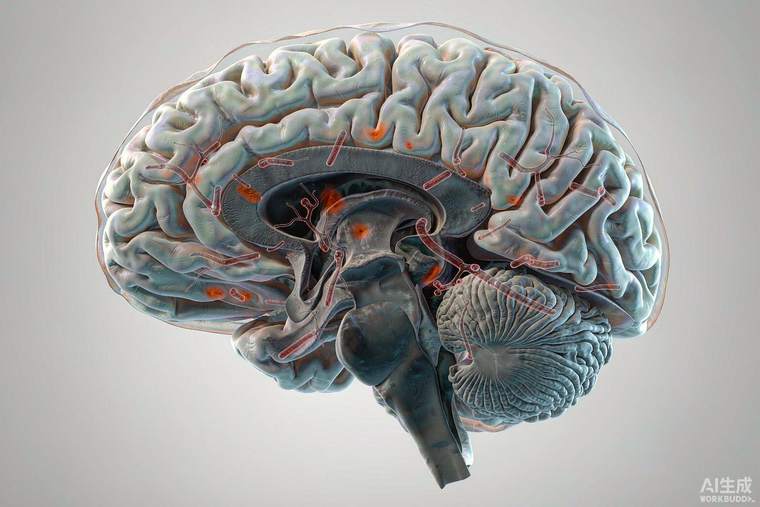
Most cerebral small vessel disease is sporadic and related to age, blood pressure and diabetes. A small but important group is monogenic — caused by a single gene mutation — and presents decades earlier, often with a striking family history of stroke, cognitive decline or gait disturbance. Recognising these matters: it changes prognosis, surveillance for other organs, family screening and, in one specific condition, treatment. The 2020 European Academy of Neurology consensus provides practical recommendations on diagnosis and management.
The main forms
CADASIL, caused by NOTCH3 mutations, is the commonest: recurrent subcortical strokes and progressive cognitive decline from the forties or fifties, often with migraine with aura preceding everything by years, mood changes and, later, gait disturbance and incontinence. CARASIL, from HTRA1 mutations, adds premature hair loss and severe spine disease. Other forms include COL4A1/COL4A2-related disease (which can present with infantile hemiplegia, eye and kidney involvement and a tendency to bleeding), Fabry disease (X-linked, with painful small-fibre neuropathy, kidney and heart involvement and a specific enzyme-replacement treatment), hereditary cerebral amyloid angiopathy, and pontine autosomal dominant microangiopathy with leukoencephalopathy.
Recognising the pattern
Clues that a small-vessel disease is genetic rather than sporadic include onset before about 55 years, a family history across multiple generations, migraine with aura, cognitive or psychiatric symptoms out of proportion to the strokes, involvement of other organs (skin, kidney, eyes, heart), and absence of conventional vascular risk factors. MRI is highly informative: extensive confluent white-matter hyperintensities, particularly involving the anterior temporal poles and external capsule in CADASIL, multiple lacunes, microbleeds, and enlarged perivascular spaces in a characteristic distribution. These patterns are suggestive rather than diagnostic on their own.
Confirming the diagnosis
Genetic testing is the standard: targeted gene panels or, increasingly, whole-exome sequencing, interpreted by a laboratory that distinguishes pathogenic variants from benign ones. Where genetic results are equivocal, supporting tests help — skin biopsy showing granular osmiophilic material around vessel walls in CADASIL, enzyme and substrate testing in Fabry disease, or specific imaging features. In families with a confirmed variant, predictive testing of at-risk relatives is offered through genetic counselling, with explicit discussion of the implications for insurance, employment and family planning.
Management
There is no disease-modifying treatment for most monogenic forms, so care targets risk reduction and complications: strict blood pressure control, smoking cessation, lipid management, and antiplatelet therapy individualised against bleeding risk — the presence of multiple microbleeds, particularly in COL4A1/COL4A2 disease, shifts that balance. Anticoagulation is used cautiously. One important exception is Fabry disease, where enzyme replacement therapy or chaperone therapy alters the disease course, which is precisely why identifying it among small-vessel disease cases matters.
Living with the diagnosis
Care is multidisciplinary: neurology for stroke prevention and cognition, neuropsychology for assessment of thinking and mood, physiotherapy for gait and falls, genetic counselling for the family, and, in young patients, discussion of pregnancy and inheritance risk. Because the course is unpredictable, planning ahead — advance directives, driving assessment, workplace adjustments — is part of good care rather than a pessimistic extra.