Multiple Sclerosis: Choosing a Disease-Modifying Therapy
What disease-modifying treatments do and do not do, how they are ranked by effectiveness and risk, and how the choice is individualised and switched — based on the 2021 MSTCG position statement on MS disease-modifying therapies.
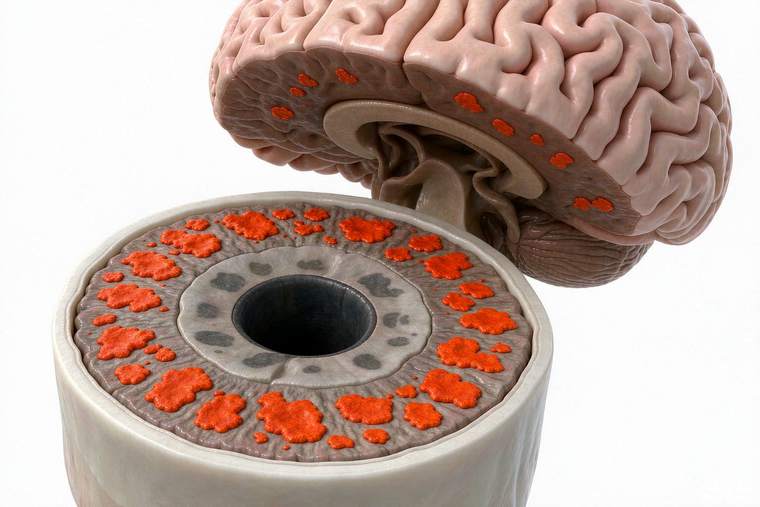
Multiple sclerosis is an autoimmune-inflammatory and neurodegenerative disease of the central nervous system, in which immune attacks cause demyelination and axonal damage. Two decades ago treatment options were few and modest; now there are well over a dozen disease-modifying therapies with very different levels of effectiveness and very different risk profiles. The 2021 position statement from the Multiple Sclerosis Treatment Consensus Group sets out how to choose among them — and is candid that the choice is a judgement, not a formula.
What these treatments do
Disease-modifying therapies reduce the frequency of relapses, the number of new lesions on MRI, and the pace of disability accumulation. They do not cure MS, and they have limited effect on the progressive, neurodegenerative component of the disease, particularly once progression is established without relapses. They are not the same as the treatments used during an acute relapse — a short course of high-dose corticosteroid speeds recovery from a relapse but does not change the long-term course. Symptom management — for fatigue, spasticity, pain, bladder and walking problems — runs alongside and matters as much to daily life.
The therapeutic landscape
Options span several categories. Moderate-efficacy platforms include injectables — interferon beta preparations and glatiramer acetate — and oral agents such as dimethyl fumarate, teriflunomide and the sphingosine-1-phosphate receptor modulators (fingolimod, siponimod, ozanimod). Higher-efficacy options include monoclonal antibodies: natalizumab, ocrelizumab, ofatumumab and rituximab, and alemtuzumab and cladribine, which work through immune cell depletion or sequestration. A common strategic debate is escalation — starting moderate and switching if activity appears — versus early high-efficacy treatment, and the statement supports early use of high-efficacy therapy in patients with prognostic features suggesting aggressive disease, while acknowledging that individual values and risk tolerance shape the decision.
Safety and monitoring
Every therapy has a specific safety profile that determines monitoring. Progressive multifocal leukoencephalopathy — a serious brain infection — is linked mainly to natalizumab and is managed by stratifying risk with JC virus antibody status and treatment duration, with regular MRI surveillance. Cell-depleting therapies increase infection risk and require vaccination planning, immunoglobulin monitoring and, for some, long-term immune surveillance. Fingolimod requires first-dose cardiac monitoring; teriflunomide requires liver monitoring and has a defined accelerated elimination procedure; alemtuzumab and cladribine require extended monitoring for secondary autoimmune conditions. None of this means these drugs are unsafe — it means treatment belongs with a team that runs the monitoring.
Pregnancy and family planning
This is a major consideration, since MS commonly affects young adults. The statement gives specific guidance: family planning should be discussed before treatment starts, some therapies require a defined washout, others can be continued until conception, and relapse risk generally falls during pregnancy with a rise in the first months after delivery. Glatiramer acetate and interferons have the most reassuring data in pregnancy. Breastfeeding and resumption schedules are individualised.
Switching and review
Treatment is reviewed at defined intervals using relapse history, MRI and disability measures; "no evidence of disease activity" is the working target. Switching is considered for breakthrough activity, intolerable side effects, safety signals or changing life circumstances — and the choice of a successor depends on what was used before and why it stopped. Practical advice: keep a personal record of therapies, dates and MRI results; report infections and new symptoms promptly; and discuss vaccination status before starting any cell-depleting therapy.