Neonatal Respiratory Failure: When ECMO Is Considered
What ECMO does for newborns with reversible respiratory failure, which babies are considered for it, how cannulation and daily management work, and the risks families should understand — based on the ELSO neonatal respiratory failure guideline.
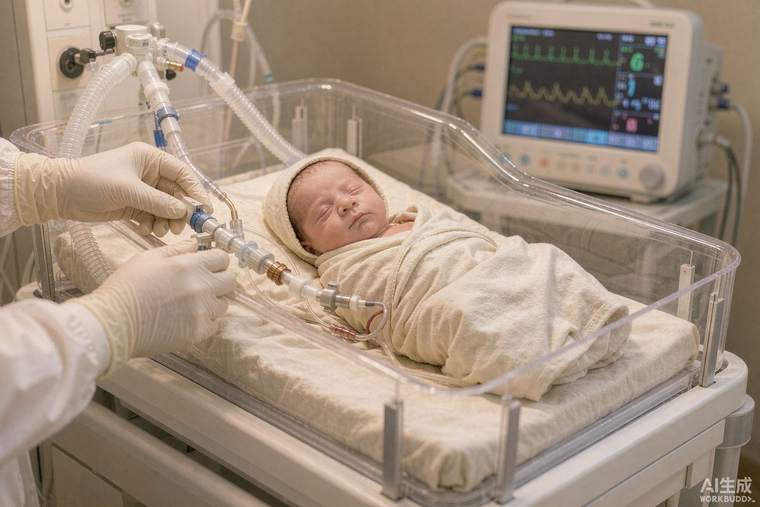
Most newborn breathing problems resolve with conventional care: oxygen, gentle ventilation, surfactant and inhaled nitric oxide. A small group does not. For babies with severe but potentially reversible respiratory failure, extracorporeal membrane oxygenation (ECMO) takes over gas exchange outside the body while the lungs rest and heal. Neonates have the best survival of any ECMO age group — but the margin for error is narrow and the treatment is intensive. This guide summarises the Extracorporeal Life Support Organization (ELSO) guideline on neonatal respiratory failure.
Which babies are considered
ECMO is considered when maximal conventional therapy is failing and the underlying condition is judged reversible. Typical candidates include meconium aspiration syndrome, persistent pulmonary hypertension of the newborn, congenital diaphragmatic hernia, sepsis or pneumonia, and severe respiratory distress syndrome — in babies generally near term, with reversible lung disease and no prohibitive contraindication. Contraindications include severe prematurity (very low gestational age and birth weight, where bleeding risk is high), lethal chromosomal or structural anomalies, severe irreversible brain injury, and conditions with no prospect of recovery. Decisions are made by a multidisciplinary team and reviewed against published survival data for the specific diagnosis.
Modes and cannulation
Two modes are used. Veno-arterial (VA) ECMO drains blood from a vein and returns it to an artery, supporting both the lungs and the heart — standard where cardiac function is also compromised. Veno-venous (VV) ECMO returns blood to a vein and supports only gas exchange, sparing the carotid artery but demanding good heart function. In newborns, cannulation is usually by surgical cut-down of the right neck vessels, with ultrasound used to size the vessels; cannula diameter is chosen to occupy most of, but not occlude, the vessel. The procedure is typically performed in the intensive care unit under full sterile conditions.
Daily management
On ECMO the team manages flow rates, oxygen delivery and carbon dioxide removal, ventilation settings that keep the lung open but quiet, sedation and sometimes paralysis, temperature, and fluid and nutrition balance. Anticoagulation is essential to prevent clots in the circuit while the baby is at risk of bleeding — ELSO notes there is no single ideal agent and no universal target, with anti-Xa levels commonly used as a guide alongside clinical assessment. Circuit checks, daily imaging and serial ultrasound of the head to detect bleeding are part of routine care.
Risks and recovery
The serious risks are bleeding — particularly intracranial haemorrhage, which drives long-term outcome — stroke, infection, kidney injury, and mechanical circuit problems. Survival differs substantially by diagnosis, and families should ask for the figure that applies to their baby's condition, not the overall average. Weaning is gradual: flow is reduced as the lungs recover, and decannulation follows a trial off support. After discharge, structured neurodevelopmental follow-up is part of good care. In China, neonatal ECMO is concentrated in a limited number of tertiary centres; transfer networks exist but capacity varies, so asking early about referral to a centre with an established programme can matter.