Obstructive Sleep Apnoea and Obesity Hypoventilation: Assessment and Treatment
Who should be tested for sleep apnoea, what the sleep study involves, and how CPAP, weight management and — for obesity hypoventilation — ventilatory support fit together, based on the 2021 NICE guideline for people aged 16 and over.
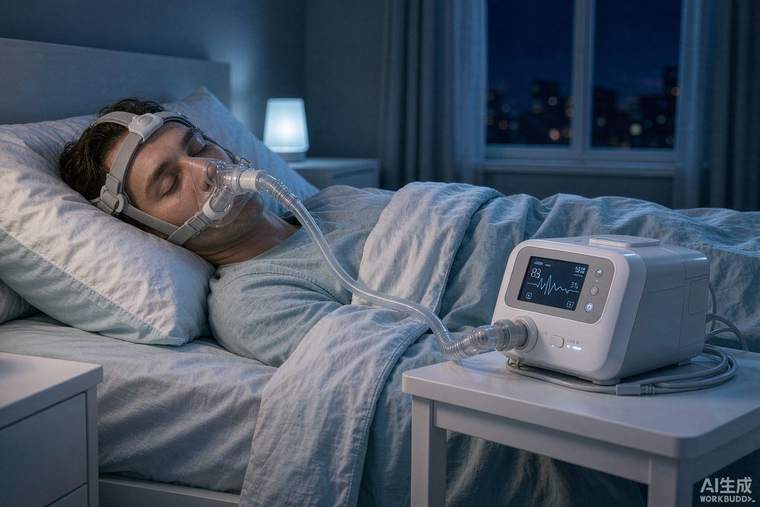
Obstructive sleep apnoea (OSA) happens when the throat repeatedly collapses during sleep, fragmenting sleep and dropping oxygen levels. Obesity hypoventilation syndrome (OHS) is a related but more serious condition: daytime carbon dioxide retention in someone with obesity, caused by the combined effect of airflow obstruction and reduced breathing drive. Both are common, under-diagnosed, and treatable. This guide reflects the 2021 NICE guideline covering people aged 16 and over.
Who should be assessed
Seek assessment if you snore loudly and have witnessed pauses in breathing, or if you have unexplained daytime sleepiness, morning headaches, poor concentration, or wake unrefreshed despite adequate time in bed. Certain groups warrant a lower threshold for testing: people with difficult-to-control hypertension, atrial fibrillation, type 2 diabetes, stroke history, or those who drive professionally or operate machinery. In obesity hypoventilation, breathlessness, ankle swelling and drowsiness with a BMI over 30 and a raised bicarbonate on a routine blood test are typical clues.
The assessment pathway
Assessment starts with a structured sleep history and an examination that includes BMI, neck circumference, blood pressure and an inspection of the upper airway. Questionnaires such as the Epworth Sleepiness Scale quantify daytime sleepiness. Confirmation uses a sleep study: oximetry or limited-channel recording at home for straightforward suspected OSA, and full polysomnography where the picture is complicated, where OHS is suspected, or where home testing is inconclusive. Severity is expressed as the apnoea–hypopnoea index (events per hour): mild 5–14, moderate 15–29, severe 30 or more. For suspected OHS, an awake blood gas measuring carbon dioxide is essential, because it is this — not the apnoea count — that defines the condition.
Treatment options
For moderate to severe symptomatic OSA, continuous positive airway pressure (CPAP) delivered through a nasal or face mask is the first-line treatment and reliably resolves obstruction, sleepiness and blood-pressure impact — but only if it is actually worn, so mask fitting and humidification matter. Mandibular advancement devices, custom-made by a dentist, are an option for mild to moderate OSA or for people who cannot tolerate CPAP. Positional therapy helps when apnoea occurs mainly on the back. Weight management is recommended for everyone with a raised BMI and can substantially reduce severity; bariatric surgery is considered in selected patients. Surgery to the palate or tongue is not routine and is reserved for specific anatomical problems after other options have failed.
Living with the diagnosis
Improvement is measurable: expect follow-up to review usage data, symptom scores and blood pressure. Practical advice includes avoiding alcohol and sedatives before sleep, treating nasal obstruction, and — if you are very sleepy — not driving until treatment is effective. For OHS, non-invasive ventilation during sleep is usually needed in addition to CPAP, and weight loss is the disease-modifying intervention. In China, sleep laboratories in major respiratory hospitals run attended polysomnography at a fraction of Western cost, and portable studies can often be started within days.