Low Oxygen After Surgery: Non-Invasive Breathing Support
Why oxygen levels drop after operations, and how high-flow nasal oxygen, CPAP and NIPPV are chosen and used — based on the joint ESA/ESICM guideline on non-invasive respiratory support for perioperative hypoxaemia.
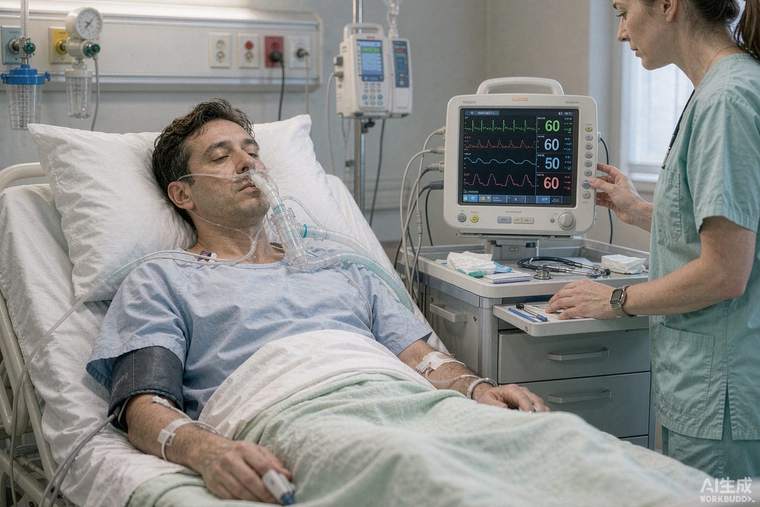
Low blood oxygen after surgery is common — reported in roughly a fifth to over half of patients within the first 48 hours, depending on the surgery and how it is measured — and it matters: postoperative hypoxaemia is associated with more pulmonary complications, longer hospital stays and worse outcomes. Standard supplemental oxygen through a nasal cannula or mask helps, but does not always correct the problem, because the underlying mechanism is usually that parts of the lung have collapsed rather than that too little oxygen is being delivered. The joint European Society of Anaesthesiology and Intensive Care Medicine guideline compares conventional oxygen therapy with high-flow nasal oxygen, CPAP and non-invasive positive pressure ventilation, and issues recommendations for their use.
Why oxygen falls after surgery
Anaesthesia, muscle relaxation, lying flat, pain and shallow breathing all reduce lung volume, particularly at the lung bases, causing atelectasis — collapse of small airways and air sacs. Abdominal and chest surgery, obesity, obstructive sleep apnoea, smoking, chronic lung disease, emergency surgery and longer operations all raise the risk. Prevention is the first line: lung-protective ventilation during surgery, avoidance of excessive fluid and of unnecessarily high oxygen concentrations, good pain control that still allows deep breathing, early mobilisation, and upright positioning.
The options
Conventional oxygen therapy delivers oxygen through a simple mask or nasal cannula and is appropriate for mild hypoxaemia. High-flow nasal oxygen delivers warmed, humidified gas at high flow through soft nasal prongs; it is comfortable, provides a small amount of positive airway pressure, washes out dead space and improves oxygenation reliably — it has become the first choice for many patients with mild to moderate hypoxaemia who need more than a simple mask. CPAP delivers a continuous positive pressure through a mask, holding alveoli open and recruiting collapsed lung, and is effective for atelectasis and for patients with obstructive sleep apnoea or heart failure-related pulmonary congestion. Non-invasive positive pressure ventilation adds a pressure boost to each breath, supporting the work of breathing and improving carbon dioxide clearance; it is used for patients with hypercapnia, respiratory muscle fatigue or cardiogenic pulmonary oedema.
Choosing and using them
Choice follows the physiological problem and the trend rather than a single number. The guideline recommends assessing the response to treatment within a defined short period and escalating or changing modality if oxygenation does not improve — a patient who is deteriorating on high-flow oxygen should be escalated, not observed. Where non-invasive support is used for hypercapnic respiratory failure or after extubation in high-risk patients, it should be delivered in a setting with monitoring and staff able to recognise failure; delayed intubation in a patient who is not responding is associated with worse outcomes.
Safety and comfort
Each modality has practical limits. High-flow oxygen is comfortable and allows talking and eating, but provides limited pressure. CPAP and NIPPV require a well-fitting mask, are less comfortable, and carry risks of skin pressure injury, abdominal distension, aspiration and — in patients who are vomiting or unable to protect their airway — a real aspiration risk that makes them unsuitable. Patients with a reduced level of consciousness, facial trauma or recent upper airway surgery need individualised assessment.
What to expect
If you are told you need breathing support after surgery, ask what problem it is treating — oxygenation, carbon dioxide clearance, or work of breathing — how long it is expected to be needed, and what will happen if it doesn't help. Sitting upright when possible, using an incentive spirometer, treating pain adequately and moving early all complement the support and shorten how long it's needed.