Primary Aldosteronism: A Missed Cause of High Blood Pressure
Who should be screened for primary aldosteronism, how the three-step diagnosis works, and what surgery or medication can achieve — based on Chinese guidance for cardiologists.
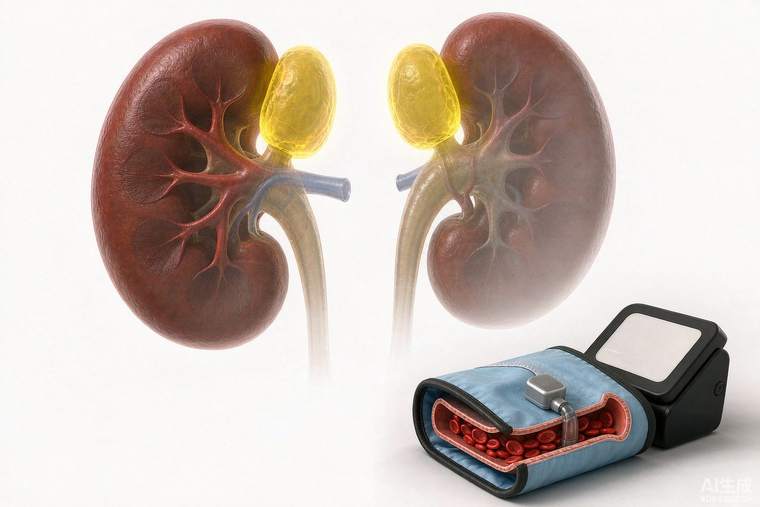
Primary aldosteronism (PA) is over-production of aldosterone by the adrenal glands, causing salt and water retention, potassium loss and high blood pressure. It is one of the most common causes of secondary hypertension and, crucially, causes organ damage out of proportion to the blood pressure reading: compared with ordinary hypertension, PA is associated with roughly 2.6 times the stroke risk, 1.8 times coronary disease, 3.5 times atrial fibrillation and 2.1 times heart failure. Because most patients first present to cardiology rather than endocrinology, it is frequently missed. This guide follows Chinese guidance written specifically to raise awareness among cardiovascular and general practitioners.
Who should be screened
Screening is recommended far beyond the classic "hypertension plus low potassium" picture. Consider testing if you have blood pressure that is high, resistant to three or more medicines, or diagnosed before age 40; an adrenal nodule found on imaging; hypertension with sleep apnoea, unexplained atrial fibrillation, extensive arterial calcification or recurrent arrhythmia; or hypertension with diabetes. A first-degree relative with early hypertension or stroke is another reason to ask.
The three-step pathway
Step one is screening with the aldosterone-to-renin ratio. Potassium is corrected first, and some medicines must be adjusted because they distort the result — mineralocorticoid receptor antagonists, beta-blockers, ACE inhibitors or diuretics may need to be switched to agents such as verapamil or doxazosin for a few weeks. Step two is confirmatory testing: a positive ratio alone is not a diagnosis, and suppression testing (saline infusion, captopril challenge or fludrocortisone suppression, depending on the centre) is used to demonstrate that aldosterone secretion is autonomous. Step three is subtype classification: a CT scan of the adrenals plus adrenal vein sampling, which is the reference method for distinguishing a one-sided aldosterone-producing adenoma from bilateral hyperplasia — the distinction that decides whether surgery is possible. Genetic testing is reserved for young patients or familial cases, where glucocorticoid-remediable aldosteronism can be confirmed and treated medically.
Treatment
Unilateral disease is treated by laparoscopic adrenalectomy, which cures or substantially improves hypertension in most patients and removes the excess cardiovascular risk — though some patients, especially those with long-standing hypertension, still need medication afterwards. Bilateral disease is treated medically and lifelong with a mineralocorticoid receptor antagonist, spironolactone or eplerenone, plus blood-pressure medicines as needed. Potassium, kidney function and blood pressure are monitored regularly.
What to ask
Because the pathway depends on medication adjustments and specialised sampling, it should be run by a hypertension or endocrine centre with adrenal vein sampling experience. Ask: is my potassium corrected before testing, which medicines need changing, will confirmation testing be done, and is adrenal vein sampling available here? Bringing your full medication list and previous scans to the first appointment saves a cycle.