Cervical Lesions: Screening, Colposcopy and Treatment Explained
From HPV primary screening to colposcopy, biopsy, CIN grading and LEEP or cold-knife conisation - a plain-language walkthrough of how cervical pre-cancer is found and treated in China.
Cervical cancer is one of the most preventable cancers there is, because the pre-cancerous phase lasts years and can be detected and treated. The Chinese clinical guideline for cervical lesions sets out the whole chain: who is screened, with what test, how abnormal results are triaged, and how confirmed disease is treated and followed.
Terms that appear on reports
Screening
Women living with HIV are screened annually with both tests, other immunosuppressed women annually with cytology, and during pregnancy only clearly abnormal findings are investigated - ECC and conisation are contraindicated.
Tests used are validated HPV assays detecting fourteen high-risk types, cytology reported in the Bethesda system, co-testing where both are done together, and self-sampled HPV for women in areas with poor access, which performs close to clinician-collected samples.
Colposcopy
The procedure follows a standard sequence: saline to visualise the original squamocolumnar junction, 5 percent acetic acid with assessment of acetowhitening after a minute, Lugol's iodine to map non-staining areas, and a green filter to examine abnormal vessels. Two to four targeted biopsies are taken from the worst area, with ECC where indicated, and specimens are orientated by clock position.
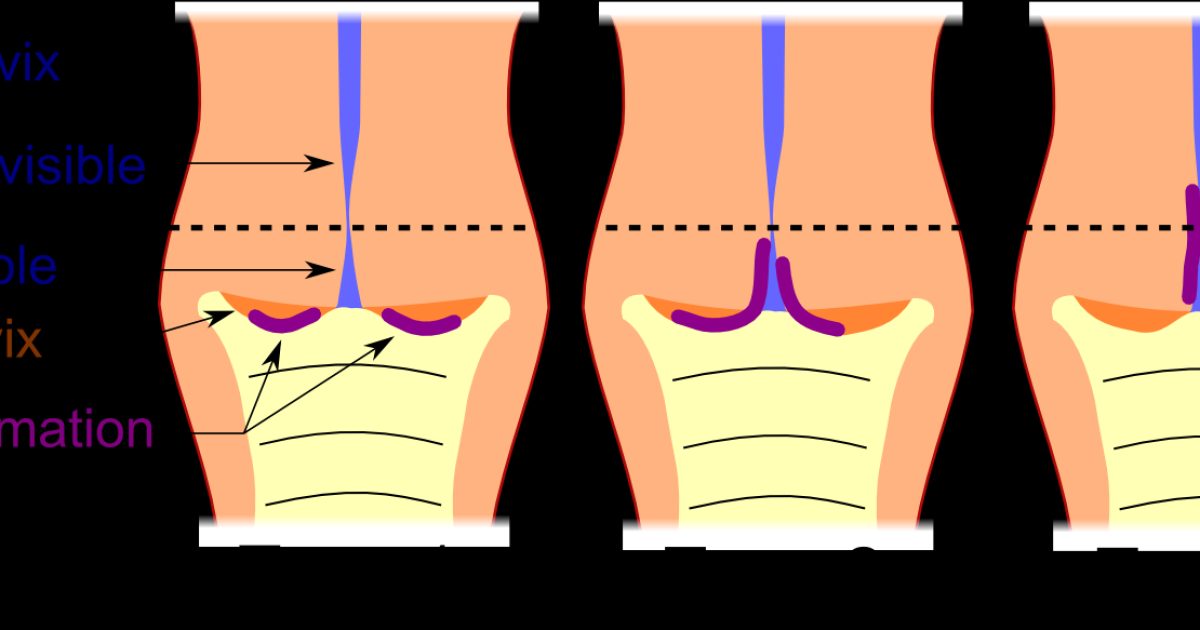
A colposcopy is described as adequate or inadequate depending on whether the whole junction and the whole lesion are visible, and findings are graded with a Swede score, with five or above suggesting high-grade disease.
Pathology
Treatment by grade
CIN2 is treated with LEEP or cold-knife conisation, particularly when p16 is diffusely positive or the lesion involves more than two quadrants. In women who wish to preserve fertility, careful observation with colposcopy and co-testing at six months is an option, proceeding to surgery if it progresses. In pregnancy, treatment is deferred to six to eight weeks postpartum.
CIN3 is treated with excision. Where margins are negative, high-risk HPV testing at twelve months is the follow-up test. Positive margins warrant repeat colposcopy and ECC at two to four months, and re-excision or hysterectomy if disease persists. Recurrence after treatment runs 6 to 16 percent over five years, and persistent HPV positivity is the strongest predictor.