Gastrointestinal Stromal Tumour (GIST): 2025 Diagnosis and Treatment Guide
GIST management is driven by mutation type, not just tumour size. This guide sets out the molecular workup, the combined clinical-molecular risk stratification, and how imatinib, sunitinib, regorafenib and ripretinib are sequenced.
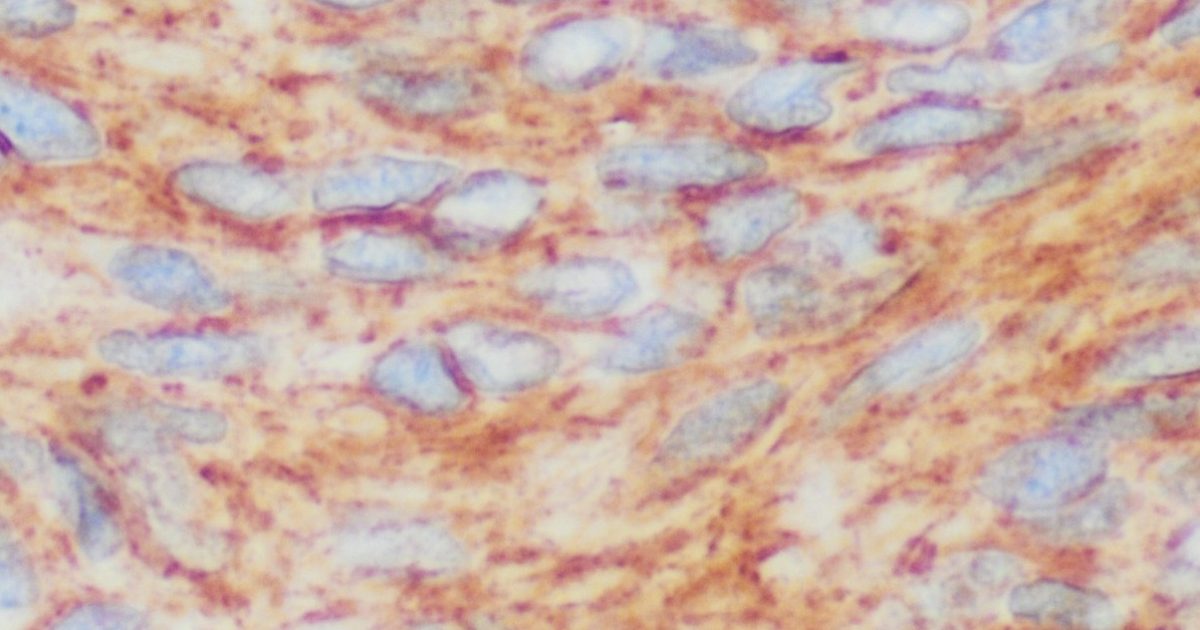
Gastrointestinal stromal tumour is the commonest mesenchymal tumour of the digestive tract, arising from the interstitial cells of Cajal or their precursors. It is also the model disease for molecularly driven cancer treatment: the choice and dose of therapy depends on which mutation the tumour carries.
GIST accounts for roughly 1 to 3 percent of gastrointestinal tumours, with an annual incidence of about 1.1 to 1.5 per 100,000. Median age at diagnosis is around 60. The stomach accounts for 50 to 60 percent and the small intestine 30 to 35 percent; colorectum, oesophagus and extra-gastrointestinal sites are less common.
Presentation
Diagnosis
Contrast-enhanced CT of the abdomen is the standard staging investigation; GISTs are typically hypervascular with brisk arterial enhancement. MRI is more sensitive for liver metastases. PET-CT is valuable for assessing metabolic response to targeted therapy, where shrinking may lag behind biological response.
Histologically GIST is spindle cell in about 70 percent of cases, epithelioid in 20 percent, and mixed in the remainder. Immunohistochemistry is the cornerstone: CD117 is positive in over 90 percent and DOG-1 in around 95 to 98 percent, and using both together raises diagnostic accuracy above 98 percent.
Molecular testing is now mandatory
Roughly 5 percent of GISTs are wild-type for KIT and PDGFRA. SDH-deficient GIST - identifiable by loss of SDHB staining - occurs in children, young adults and Carney triad patients and behaves differently.
Risk stratification
Surgery
Systemic therapy
After progression on imatinib, sunitinib is standard second-line, and the choice beyond that depends on the resistance mutation: KIT exon 13 or 14 secondary mutations tend to remain sunitinib-sensitive, whereas exon 17 or 18 mutations are not, and ripretinib may be preferred. Regorafenib is the established third-line agent, with ripretinib as fourth-line.