Inflammatory Bowel Disease: Chinese 2023 Consensus on Diagnosis and Treatment
Ulcerative colitis and Crohn's disease require different diagnostic workups and different treatment ladders. This overview explains how the two are distinguished, what investigations establish the diagnosis, and how modern therapy is escalated.
Inflammatory bowel disease comprises two chronic relapsing conditions of the gut: ulcerative colitis and Crohn's disease. Both remain far more common in Western countries, but incidence has risen steadily in China over the past two decades, and Chinese tertiary centres now manage large IBD cohorts. The 2023 Chinese consensus on diagnosis and treatment, like its international counterparts, treats the two diseases separately because their investigation, treatment and surgical implications differ.
Two diseases, one name
Crohn's disease can affect any part of the gastrointestinal tract from mouth to anus, most often the terminal ileum and colon. Inflammation is patchy - skip lesions separated by normal mucosa - and is transmural, which is why strictures, fistulas and abscesses occur. Abdominal pain, weight loss and perianal disease are typical.
Roughly 10 to 15 percent of cases cannot be confidently classified at first presentation and are labelled IBD-unclassified until follow-up or surgery clarifies the picture.
Making the diagnosis
Blood tests look for anaemia, raised C-reactive protein and erythrocyte sedimentation rate, hypoalbuminaemia and electrolyte disturbance. Faecal calprotectin is a useful non-invasive marker of intestinal inflammation and helps distinguish inflammatory from functional symptoms. Stool studies and Clostridioides difficile testing are mandatory to exclude infection, because starting immunosuppression on top of an undiagnosed infection is dangerous.
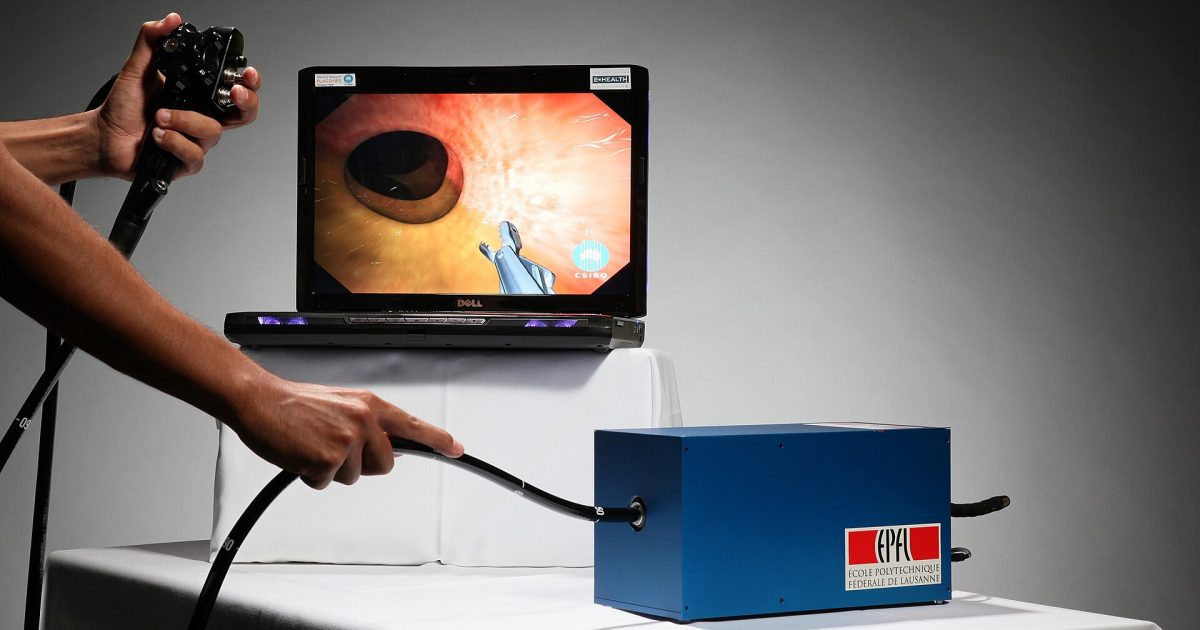
Ileocolonoscopy with biopsies from both inflamed and uninflamed segments is the primary investigation. In ulcerative colitis, biopsies show continuous crypt architectural distortion, crypt abscesses and basal plasmacytosis. In Crohn's disease, granulomas - when found - are highly suggestive but are present in only a minority of biopsies.
Cross-sectional imaging - CT or MR enterography - is essential in Crohn's disease to define the extent of small bowel involvement and to detect strictures and penetrating complications that endoscopy cannot reach. Capsule endoscopy is used when small bowel disease is suspected but imaging is inconclusive, after excluding significant stricture.
Assessing severity and extent
Crohn's disease is classified by the Montreal system: age at onset, location - ileal, colonic or ileocolonic - and behaviour, whether inflammatory, stricturing or penetrating. Perianal disease is recorded separately.
Treatment: the ladder
In ulcerative colitis, 5-aminosalicylates remain first-line for mild to moderate disease, given topically or orally depending on extent. Corticosteroids induce remission but are not maintenance therapy. Immunomodulators such as azathioprine or 6-mercaptopurine maintain remission. Biologics - anti-TNF agents, vedolizumab, ustekinumab - and small molecules such as tofacitinib are used for moderate to severe disease or steroid dependence. In severe colitis unresponsive to intravenous steroids, infliximab or ciclosporin are used as rescue therapy, with colectomy if there is no response.
In Crohn's disease, corticosteroids induce remission but budesonide is preferred for localised ileocaecal disease because of fewer systemic effects. Immunomodulators and biologics - anti-TNF agents, vedolizumab, ustekinumab - are used for maintenance, and anti-TNF combined with azathioprine is more effective than either alone in selected patients. Exclusive enteral nutrition is an established induction therapy in children and is used in adults where appropriate. Surgery is reserved for complications or medically refractory disease, and segments are resected conservatively because recurrence is common.