Reviewed by WANGYATAO·Last reviewed 2026-11-11·Medical disclaimer In short
A full executive screening in Shanghai, results explained in English, then the karst country of Guangxi: the Li River, Yangshuo and the Longji rice terraces, with no altitude and no hard climbing.
What this guide covers: The two services this itinerary is built on · The route at a glance · Day by day · Before you fly: the countdown · What it costs — the honest version
Medical Tourism · Itinerary No. 05 · Shanghai & Guilin · 9 days / 8 nights · Screening first, then the karst country
Three reasons this order matters. 1. Your report is explained before you travel on, in English, with time to ask — a screening is only worth having once someone walks you through the numbers. 2. Guilin is the gentlest long-haul add-on in China: no altitude, no sustained climbing, a 2.5-hour flight from Shanghai, and a landscape you can enjoy from a boat as easily as from a path. It is the pairing we recommend most often to anyone who wants the trip to end quietly. 3. Day 1 is deliberately empty, because long-haul arrival affects blood pressure and fasting glucose.
The two services this itinerary is built on
1. Medical companionship — someone with you at every step
In China, the hard part of seeing a doctor is rarely the medicine. It is the registration window, the queue-number system, the payment counter, the department you did not know you needed — and the moment a physician explains something in rapid clinical Chinese. Your companion takes all of that on, and stays in the room with you.
| Stage | What your companion does |
|---|
| Before you fly | Confirms appointment slots, pre-registers you in the hospital system, and sends preparation instructions in your own language. |
| At the hospital | Registration and queue numbers, payment and itemised receipts, and walking you between departments so you are never sent to the wrong floor. |
| In the consultation | Interprets in both directions: your history and symptoms into clinical Chinese, the physician explanation back into English, and asks the follow-up questions you forgot. |
| At each test | Explains what is about to happen and what you will feel, waits through it, and collects the films and reports so nothing goes missing between departments. |
| Afterwards | Chases the outstanding results, has them translated, and walks you through the follow-up plan before you leave the country. |
2. Airport transfers at both ends
| Arrival — Day 1 | Departure — Day 9 |
|---|
| Meeting point | Inside the arrivals hall at PVG or SHA, after customs, holding a name board — not out at the kerb. | Hotel lobby in Guilin, three hours before an international departure. |
| Timing | Flight tracked in real time; 60 minutes of free waiting on international arrivals. | Pick-up set three hours before departure. |
| Vehicle | Sedan for one or two travellers with luggage; MPV for families. Child seat on request. | Same standard of vehicle, with room for the luggage you accumulated in Guilin. |
| Route | PVG (Pudong) to downtown about 45-70 minutes; SHA (Hongqiao) about 30-40 minutes. | Guilin city to Liangjiang airport about 45 minutes. |
| In the car | Intake usually starts here: history, medications, and a printed plan for day 2. | Your report package travels with you — in hand and in the cloud. |
Book open-jaw: into Shanghai, home from Guilin. Guilin's airport handles fewer international routes than Shanghai or Guangzhou, so most travellers connect through one of them — we build the connection time into the plan rather than leaving you to guess.
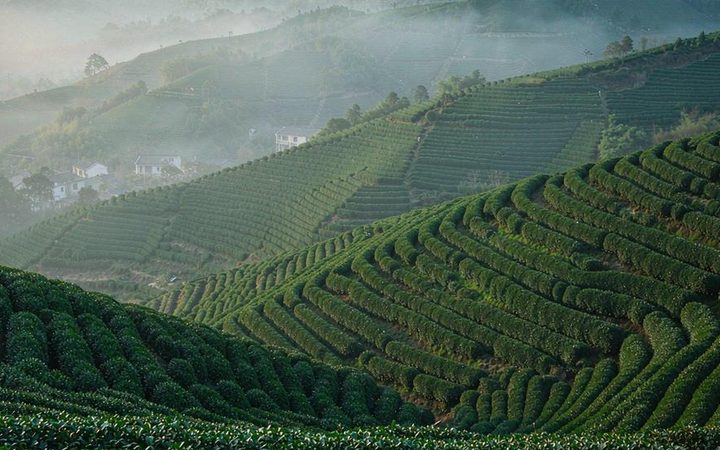
The Longji rice terraces, north of Guilin
The route at a glance
| Day | Base | Medical | Travel | Companion and transfer | Overnight |
|---|
| Day 1 | Shanghai | Intake and preparation briefing | Arrival, rest | Airport pickup, companion with you | Shanghai |
| Day 2 | Shanghai | Screening day (fasting) | - | Companion at every station | Shanghai |
| Day 3 | Shanghai | Endoscopy if included; English report interpretation | Rest and pack | Companion (procedure escort) | Shanghai |
| Day 4 | Shanghai / Guilin | - | Afternoon flight, about 2.5 hours | Airport transfer both ends | Guilin |
| Day 5 | Guilin / Yangshuo | - | Li River cruise downstream to Xingping | Companion and driver | Yangshuo |
| Day 6 | Yangshuo | - | Yulong River bamboo raft, countryside loop | Companion (travel mode) | Yangshuo |
| Day 7 | Yangshuo / Longji | - | Drive north to the Longji terraces | Companion and driver | Longji |
| Day 8 | Longji / Guilin | - | Terraces at sunrise, then back to Guilin | Companion and driver | Guilin |
| Day 9 | Guilin | - | Departure | Airport drop-off; report in hand | - |
Day by day
Day 1 — Arrival and preparation
| What happens |
|---|
| Arrival | Land at PVG or SHA. Your driver waits inside the arrivals hall with a name board after customs; your companion rides into the city with you. |
| Afternoon | Intake conversation — history, medications, what the screening covers. Consent forms explained in English before you sign, and fasting instructions in writing. |
| Evening | Rest and a light dinner. Nothing to eat after 8 pm. |
Day 2 — Screening day
| What happens |
|---|
| Morning | Fasting bloods, urine and vitals, then imaging in the order the hospital slots allow. Your companion handles registration, queues and payment. |
| Afternoon | Ultrasound, cardiac and remaining stations; endoscopy with sedation if included. You cannot drive or sign anything afterwards, which is why your companion stays. |
| Evening | Back at the hotel by late afternoon. Light meal, early night. |
Day 3 — Your results
| What happens |
|---|
| Morning | A physician walks you through the report in English — what is normal, what is borderline, what needs another look. |
| Afternoon | Anything flagged becomes a single outpatient visit here in Shanghai, while you are still in the city that ran the test. |
| Evening | Pack for the south. Guilin is warmer and wetter than Shanghai for most of the year. |
Day 4 — Shanghai to Guilin
| What happens |
|---|
| Morning | Slow start, and any follow-up visit flagged yesterday. |
| Afternoon | Flight to Guilin, about 2.5 hours. Transfer in, then the city lakes and the pagodas on the water. |
| Evening | Guilin rice noodles for dinner, and an early night before the river. |
Day 5 — The Li River
| What happens |
|---|
| Morning | Board at Zhujiang or directly at Xingping for the classic downstream stretch, the one on the back of the twenty-yuan note. |
| Afternoon | Disembark at Xingping, walk the old fishing village, then transfer to Yangshuo. |
| Evening | West Street or somewhere quieter — Yangshuo has both, and after a hospital week most people want the second. |
Day 6 — Yangshuo countryside
| What happens |
|---|
| Morning | Bamboo raft on the Yulong River, which is quieter than the Li and shallow enough to feel safe. |
| Afternoon | Cycling or by car through the paddy roads between the towers. Flat, at whatever pace you set. |
| Evening | Cormorant fishing display on the river, or nothing at all. |
Day 7 — Longji rice terraces
| What happens |
|---|
| Morning | Drive north, about two and a half hours, climbing into the terraced hills. |
| Afternoon | Walk between the viewing platforms at Ping'an or Jinkeng. The paths are stepped; your companion carries the water and sets the pace. |
| Evening | Stay in the village. Cooler up here, and very quiet after the last day-trippers leave. |
Day 8 — Sunrise, then Guilin
| What happens |
|---|
| Morning | Terraces at first light if the weather cooperates — this is why you stayed the night. |
| Afternoon | Back down to Guilin, with the Reed Flute Cave or the Elephant Trunk Hill on the way. |
| Evening | Farewell dinner and the written summary of what the screening found and what to do next. |
Day 9 — Departure
| What happens |
|---|
| Morning | Airport transfer, three hours before departure. |
| In your bag | Full report, translated summary, imaging on disc or by secure link, and a follow-up plan your doctor at home can read. |
Karst towers and rice paddies around Yangshuo
Before you fly: the countdown
| When | What |
|---|
| 8 weeks out | Confirm visa route and book the PET-CT slot if it is included. Decide now whether you want the Li River by public cruise boat or private charter — the second costs more and is worth it in summer. |
| 2 weeks out | Send previous imaging and reports for pre-review. Tell us about blood thinners and about any mobility limits — Longji involves steps. |
| 3 days out | No alcohol, light meals, confirm fasting. Send us your flight number, terminal and arrival time. |
| Pack | Passport, previous imaging discs, medication list, insurance card, walking shoes with grip for wet stone, and a light rain shell — Guangxi rains without much warning. |
What it costs — the honest version
IMedCompanion does not publish prices, because published package prices in this industry are rarely what anyone actually pays. After your intake you receive a written, itemised estimate covering everything we charge — companion, vehicle, accommodation and service fee — with validity dates and what is excluded. Alongside it we give you the hospital's expected range for each item, so you can see the whole picture before you commit.
Two bills, on purpose. The hospital bills you for the medical care — tests, imaging, physician time — at its own rates. We bill you for everything around it: companion, vehicle, accommodation and our service fee. We do not resell medical care and we add nothing to what the hospital charges. Medical money never passes through us, which is the single clearest guarantee against the markup that gives this industry its reputation.
| Line | How it is charged | Billed by |
|---|
| Companion | Per day. The same rate on a hospital day as on a travel day — one person, all days. | IMedCompanion |
| Vehicle and driver | Per day. Covers airport runs at both ends and in-city transfers. | IMedCompanion |
| Accommodation | Per night. | IMedCompanion |
| Service fee | Quoted as a portion of the total above — coordination, scheduling and paperwork. | IMedCompanion |
| Medical care | Priced individually by the hospital: each test, each imaging slot, each consultation. | The hospital, directly |
You pay the hospital at the hospital's rates and receive the hospital's own itemised receipt. We tell you in advance what each item typically runs to, so you can sanity-check the figure — but the transaction is between you and the provider. The Shanghai-Guilin flight and all road legs are charged at cost, with your companion with you throughout.
Who this suits — and who it does not
SuitsAdults 40 and over due for a full screening; anyone who wants the trip to end somewhere beautiful without altitude or hard walking; couples where one person is screening and the other is simply on holiday.
Does not suitPregnancy; acute illness; anyone who cannot pause blood thinners and needs a biopsy; travellers who want serious trekking — if that is you, look at the Zhangjiajie route instead.
Sources and further reading
One reference to a U.S. government health source (National Institutes of Health or MedlinePlus) for the medical background of this guide. It is context, not a substitute for advice from your treating doctor.
General information for international patients, not medical advice or a diagnosis. Read the medical disclaimer.