Reviewed by WANGYATAO·Last reviewed 2026-11-11·Medical disclaimer In short
Four acupuncture and tui na sessions across a week in Beijing, with the Great Wall, the Forbidden City, the Temple of Heaven and an overnight in Chengde fitted into the days between.
What this guide covers: The two services this itinerary is built on · The route at a glance · Day by day · Before you fly: the countdown · What it costs — the honest version
Medical Tourism · Itinerary No. 17 · Beijing & Chengde · 8 days / 7 nights · Alternate-day treatment, imperial Beijing between
Three reasons this order matters. 1. Treatment runs on alternate days — four sessions across a week is what a course actually looks like, and it cannot be compressed into three consecutive days without losing the point. 2. Everything worth seeing around Beijing is within a day's reach, so no session is ever missed: the Great Wall is two hours, Chengde one hour on the fast train, the Forbidden City a short ride across town. 3. This is the route where the medical and the cultural parts reinforce each other — the imperial sites are also where this medicine was practised.
The two services this itinerary is built on
1. Medical companionship — someone with you at every step
In China, the hard part of seeing a doctor is rarely the medicine. It is the registration window, the queue-number system, the payment counter, the department you did not know you needed — and the moment a physician explains something in rapid clinical Chinese. Your companion takes all of that on, and stays in the room with you.
| Stage | What your companion does |
|---|
| Before you fly | Confirms appointment slots, pre-registers you in the hospital system, and sends preparation instructions in your own language. |
| At the hospital | Registration and queue numbers, payment and itemised receipts, and walking you between departments so you are never sent to the wrong floor. |
| In the consultation | Interprets in both directions: your history and symptoms into clinical Chinese, the physician explanation back into English, and asks the follow-up questions you forgot. |
| At each test | Explains what is about to happen and what you will feel, waits through it, and collects the films and reports so nothing goes missing between departments. |
| Afterwards | Chases the outstanding results, has them translated, and walks you through the follow-up plan before you leave the country. |
2. Airport transfers at both ends
| Arrival — Day 1 | Departure — Day 8 |
|---|
| Meeting point | Inside the arrivals hall at PEK or PKX, after customs, holding a name board — not out at the kerb. | Hotel lobby, three hours before an international departure. |
| Timing | Flight tracked in real time; 60 minutes of free waiting on international arrivals. | Pick-up set three hours before departure. |
| Vehicle | Sedan for one or two travellers with luggage; MPV for families. Child seat on request. | Same standard of vehicle. |
| Route | PEK (Capital) to downtown about 40-60 minutes; PKX (Daxing) about 50-70 minutes. | The Great Wall at Mutianyu is about two hours each way; Chengde is one hour by fast train. |
| In the car | Your companion rides with you and the first intake starts here. | Your prescription and the practitioner's written notes travel with you, not in the hold. |
Beijing has two international airports, Capital (PEK) and Daxing (PKX), about 50 km apart. Tell us which you are landing at before you fly, because the pickup is built on that and a wrong guess costs an hour.
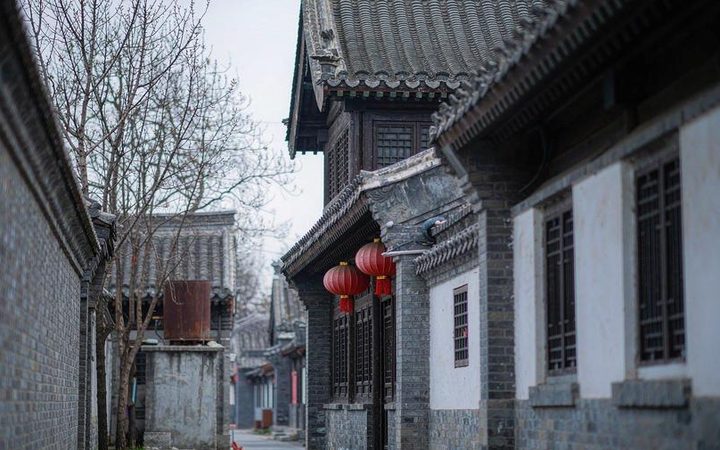
The Forbidden City, Beijing
The route at a glance
| Day | Base | Medical | Travel | Companion and transfer | Overnight |
|---|
| Day 1 | Beijing | First consultation and first treatment | Arrival, rest | Airport pickup, companion with you | Beijing |
| Day 2 | Beijing | - | Mutianyu: the Great Wall | Companion and driver | Beijing |
| Day 3 | Beijing | Second treatment | Rest between sessions | Companion at the appointment | Beijing |
| Day 4 | Beijing | - | Forbidden City and the Temple of Heaven | Companion (travel mode) | Beijing |
| Day 5 | Beijing | Third treatment | - | Companion at the appointment | Beijing |
| Day 6 | Beijing / Chengde | - | Fast train to Chengde, the Mountain Resort | Companion on the leg | Chengde |
| Day 7 | Chengde / Beijing | Fourth treatment and final review | Return to Beijing | Companion at the appointment | Beijing |
| Day 8 | Beijing | - | Departure | Airport drop-off | - |
Day by day
Day 1 — First consultation
| What happens |
|---|
| Arrival | Land at PEK or PKX. Your driver waits inside the arrivals hall with a name board; your companion rides into the city with you. |
| Afternoon | The consultation itself — pulse and tongue diagnosis, your history, what you want to change. It takes longer than a normal appointment because it has to, and your companion interprets throughout. |
| Evening | First treatment, usually acupuncture. Rest rather than sightsee afterwards; the first session is the one people feel most. |
Day 2 — The Great Wall at Mutianyu
| What happens |
|---|
| Morning | Drive out to Mutianyu, about two hours. Cable car up, then the wall itself — restored, steep in places, and quieter than Badaling. |
| Afternoon | The walk along the ramparts at your own pace, and the toboggan down if you want it. |
| Evening | Back in Beijing. Warm food and an early night before tomorrow's session. |
Day 3 — Second treatment
| What happens |
|---|
| Morning | Second session: acupuncture, and tui na or cupping if prescribed. |
| Afternoon | Rest. People often sleep after the second session, and that is the treatment working rather than a problem. |
| Evening | Light dinner following whatever food guidance you were given on day 1 — usually warm and cooked, not cold and raw. |
Day 4 — Imperial Beijing
| What happens |
|---|
| Morning | The Forbidden City, entered early and walked north to south so you exit into Jingshan park and look back over the roofs. |
| Afternoon | The Temple of Heaven: the Circular Mound and the Echo Wall, and the park around them where Beijing exercises. |
| Evening | Peking duck, or the plainer option if your practitioner has you on a restricted diet. |
Day 5 — Third treatment
| What happens |
|---|
| Morning | Third session. By now your practitioner is adjusting rather than following the original prescription — tell them how the last two days went. |
| Afternoon | Free, and genuinely useful as a rest day before the night away. |
| Evening | Pack an overnight bag only; the main luggage stays at the Beijing hotel. |
Day 6 — Chengde
| What happens |
|---|
| Morning | Fast train to Chengde, about an hour. The Mountain Resort: the largest surviving imperial garden in China, lakes, pavilions and wooded hillsides. |
| Afternoon | The Eight Outer Temples on the hills outside the resort — the Tibetan-style ones are the reason people come. |
| Evening | Overnight in Chengde. Cooler than Beijing and very quiet, which is the point of putting it here. |
Day 7 — Fourth treatment and review
| What happens |
|---|
| Morning | Train back to Beijing. Fourth session, then the review: what has changed, what has not, and what to do at home. |
| Afternoon | A written plan, your prescription if one is issued, and a demonstration of whatever self-care or breathing practice you are meant to continue. |
| Evening | Farewell dinner. |
Day 8 — Departure
| What happens |
|---|
| Morning | Airport transfer, three hours before departure. |
| In your bag | The practitioner's written notes in English, any prescription, and a clear statement of what was treated and why — so a doctor at home is not left guessing. |
The Mountain Resort at Chengde
Before you fly: the countdown
| When | What |
|---|
| 8 weeks out | Confirm the visa route. Tell us what you are hoping the course addresses — chronic pain, sleep, stress, digestion — because the practitioner is chosen for that, not assigned at random. |
| 2 weeks out | Send any relevant medical records and your current medication list. Some herbs interact with prescribed drugs and the practitioner needs to see both. |
| 3 days out | Send your flight number, terminal and arrival time — Beijing has two international airports and the pickup depends on which. |
| Pack | Passport, medical records, medication list, loose comfortable clothing — tui na and cupping need access to the back and shoulders — and shoes with grip for the wall. |
What it costs — the honest version
IMedCompanion does not publish prices, because published package prices in this industry are rarely what anyone actually pays. After your intake you receive a written, itemised estimate covering everything we charge — companion, vehicle, accommodation and service fee — with validity dates and what is excluded. Alongside it we give you the hospital's expected range for each item, so you can see the whole picture before you commit.
Two bills, on purpose. The hospital bills you for the medical care — tests, imaging, physician time — at its own rates. We bill you for everything around it: companion, vehicle, accommodation and our service fee. We do not resell medical care and we add nothing to what the hospital charges. Medical money never passes through us, which is the single clearest guarantee against the markup that gives this industry its reputation.
| Line | How it is charged | Billed by |
|---|
| Companion | Per day. The same rate on a hospital day as on a travel day — one person, all days. | IMedCompanion |
| Vehicle and driver | Per day. Covers airport runs at both ends and in-city transfers. | IMedCompanion |
| Accommodation | Per night. | IMedCompanion |
| Service fee | Quoted as a portion of the total above — coordination, scheduling and paperwork. | IMedCompanion |
| Medical care | Priced individually by the hospital: each test, each imaging slot, each consultation. | The hospital, directly |
You pay the clinic at the clinic's rates and receive its own itemised receipt. We tell you in advance what each session typically runs to, so you can sanity-check the figure — but the transaction is between you and the provider. The Chengde fast train, the Great Wall transfer and all local legs are charged at cost, with your companion travelling with you.
Who this suits — and who it does not
SuitsAnyone with a chronic complaint — low back pain, poor sleep, stress, digestion — who wants a proper course rather than a taster session; travellers who also want the imperial sights and can get both in one week without either being rushed.
Does not suitAcute infection or fever; pregnancy without prior discussion; anyone looking for a diagnosis rather than a course — see a physician first; travellers who cannot give eight days, because four sessions need seven nights between them; and anyone for whom a two-hour drive and a wall walk is too much on day 2.
Sources and further reading
One reference to a U.S. government health source (National Institutes of Health or MedlinePlus) for the medical background of this guide. It is context, not a substitute for advice from your treating doctor.
General information for international patients, not medical advice or a diagnosis. Read the medical disclaimer.