In short
From robot-assisted gait training to transcranial magnetic stimulation and home cardiac rehab, this guide sets out which rehabilitation technologies have real evidence, the doses used, and the safety limits.
What this guide covers: How the evidence is graded · Five categories of technology · Principles that govern use · Neurological rehabilitation · musculoskeletal rehabilitation
Rehabilitation is no longer only hands and exercise mats. Robotics, electrical stimulation, brain stimulation and remote monitoring are now part of routine practice in Chinese rehabilitation departments, and the national guideline on clinical application of rehabilitation technology exists to say which of these tools have evidence behind them, how they should be dosed, and where the safety limits are.
How the evidence is graded
The guideline uses GRADE. Level I evidence comes from randomised trials, level II from non-randomised controlled studies, level III from observational work, level IV from expert consensus. Recommendations are strong or weak. The evidence base assembled for the guideline includes several hundred randomised trials and dozens of meta-analyses, which is why some recommendations are firm and others are explicitly provisional.
Five categories of technology
Physical therapy covers therapeutic exercise, electrophysical agents and manual therapy. Occupational therapy covers activities of daily living and vocational rehabilitation. Speech and swallowing therapy covers aphasia therapy and techniques such as balloon dilatation for dysphagia. Psychological interventions include cognitive behavioural therapy and mindfulness. Assistive technology and rehabilitation engineering cover prosthetics, orthoses and rehabilitation robots.
Principles that govern use
Five principles run through the guideline. Treatment is individualised — a cerebral palsy programme is built around the child's developmental stage, not a fixed protocol. Decisions are evidence-led, with level I evidence preferred where it exists. Complex cases are managed by a team. Goals are functional, aimed at independence rather than impairment scores. And safety comes first: physical agents have defined contraindications, such as avoiding high-frequency electrotherapy in patients with implanted pacemakers.
Neurological rehabilitation
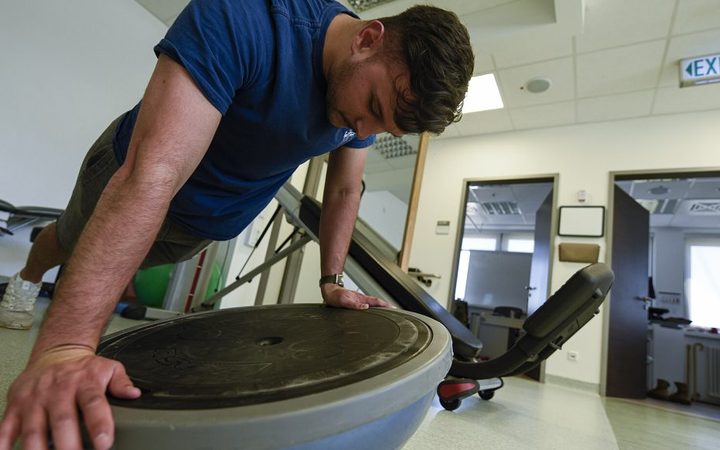
After stroke, positioning and early mobilisation begin in the acute phase, with turning every two hours and passive range-of-motion work once the patient is stable. In the recovery phase, task-specific training including robot-assisted gait training is used for patients with significant lower-limb weakness, typically five sessions a week over several weeks, with measurable gains in walking speed. Functional electrical stimulation set to a defined pulse width and frequency is used for foot drop. Transcranial magnetic stimulation for upper-limb spasticity is supported by weaker evidence and is offered as a weak recommendation.
For spinal cord injury, intermittent catheterisation every four to six hours plus pelvic floor stimulation keeps urinary infection rates low. Spasticity is managed with oral baclofen combined with botulinum toxin injections into targeted muscles. Body-weight-supported gait training starts with 30 to 50 percent of weight unloaded.
musculoskeletal rehabilitation
After total knee replacement, the pathway is staged: ankle pumps and quadriceps setting in the first days, walking with a frame and straight-leg raising in the first two weeks, stairs and proprioception work from six to twelve weeks. Continuous passive motion is used early to limit stiffness, and intermittent pneumatic compression combined with anticoagulation addresses venous thromboembolism. After cervical surgery a collar is worn for eight to twelve weeks; after lumbar fusion heavy lifting is restricted for three months.
Cardiopulmonary rehabilitation
In COPD, aerobic training is prescribed at 50 to 60 percent of maximum oxygen uptake, three to five sessions weekly, with inspiratory muscle training added. Success is judged by the six-minute walk distance and the St George's Respiratory Questionnaire. Cardiac rehabilitation is staged: in-hospital mobilisation, supervised outpatient training with a target heart rate, then community-based exercise with remote monitoring.
Paediatric and geriatric applications
For cerebral palsy, Bobath-based therapy and conductive education are combined, with botulinum toxin used for spastic muscle groups followed by stretching. For autism spectrum disorder, applied behaviour analysis and sensory integration are used intensively. In older adults, resistance training with protein supplementation and vitamin D addresses sarcopenia, and falls prevention combines strength, balance and home assessment.
What to look for in a programme
Ask three questions: which of these technologies is being used for my specific problem, what does the evidence say about it, and how will progress be measured. A department following the guideline will be able to answer all three.
Sources and further reading
One reference to a U.S. government health source (National Institutes of Health or MedlinePlus) for the medical background of this guide. It is context, not a substitute for advice from your treating doctor.
General information for international patients, not medical advice or a diagnosis. Read the medical disclaimer.